A studio by the sea in Sharm El Sheikh: what you are buying, where to look and what to check
The most affordable home in Sharm — and the one most often oversold in listings. How a studio in a compound differs from one in a hotel complex or a plain building, who it suits and what to ask before paying a deposit.
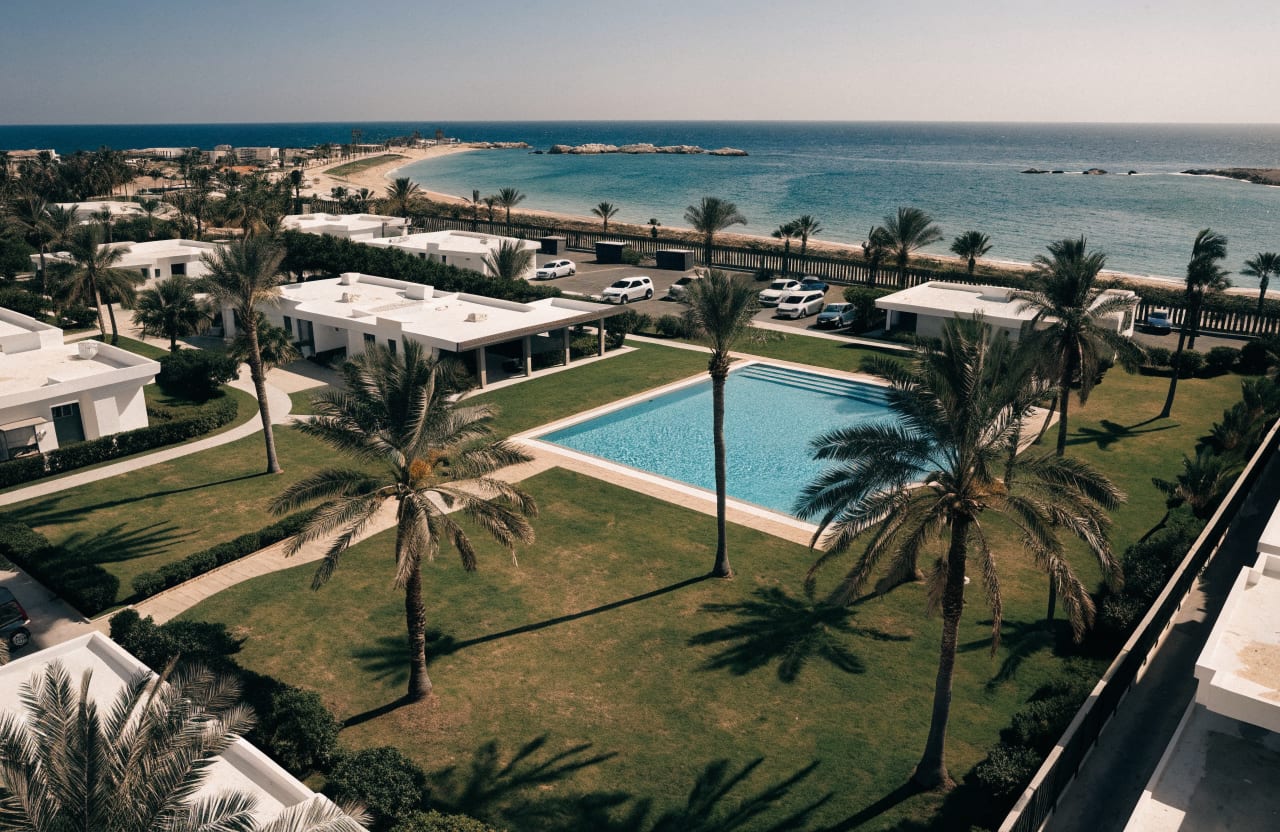
A studio is the first purchase most people think about when they start looking at Sharm El Sheikh: the smallest sum to enter the market, the least to look after, and a place to spend a month each winter. The format works — but studios also have the widest gap between how a listing describes them and what the buyer actually gets. This article is about closing that gap before the deal.
What Sharm calls a studio
There is no strict definition. 'Studio' covers a one-room unit with a kitchen corner and a bathroom, a former hotel room converted to residential use, and a small flat where the bedroom is separated by a partition rather than a door. Floor area wanders too: in one listing a studio is a tiny room with a balcony, in another a generous space with a terrace close in size to a one-bedroom flat.
So the first question to any listing is not 'how much' but 'what exactly is being sold': the documented floor area, whether there is a separate kitchen or a kitchenette, what the bathroom is like, whether there is a balcony or terrace and what it faces. Those four answers make the real price — not the word 'studio'.
Three kinds of studio — three different purchases
A studio in a residential compound
Gated grounds, a pool, security, usually a management company and a service charge. This is the most predictable option: you know who looks after the grounds, who fixes the pool pump and how outsiders get in. The downside is the charge, paid whether you live there or the studio stands empty ten months a year.
A studio in a hotel complex or a former hotel
Sharm has many complexes where residential units sit inside a working hotel's grounds, or where a whole complex has been converted from hotel to residential. The advantages are obvious: the beach, a reception, the hotel's facilities next door. The questions to ask: on what terms owners use the hotel's beach and pool, what happens if the hotel changes owner or concept, whether you may let the unit yourself or only through the complex's administration, and who pays for the common areas.
A studio in an ordinary street building
Cheap to run, with no service charge or a token one, but no grounds, pool or security either. The state of the stairwell, the roof and the water tanks depends on the neighbours. Sensible for living in residential areas such as Hadaba, where daily life works without a compound; weaker for letting to tourists.
Where to look for a studio by the sea
'By the sea' in Sharm is a route, not an address. Before you look at areas, decide what 'by the sea' means to you: stepping into the water from the grounds, ten minutes on foot along a flat road, or a view of the water from height. Those are three different markets.
- Naama Bay: the most studios, in established buildings; everything on foot; beaches mostly belong to hotels — access by arrangement or for a fee. Noisy in the evening. Suits short lets and life without a car.
- Hadaba: studios in residential complexes on the plateau; cheaper, quieter, year-round life. The water is a descent from the plateau, and the descent has to be walked, not measured. Suits living and wintering.
- Montazah: the slope above Naama with bay views; studios mostly in compounds of recent years. Quieter than Naama, closer to its facilities than Hadaba.
- Nabq: new complexes with large grounds and pools; many studios, including in projects under construction. Hard without a car — budget for transport.
- Sharks Bay and Ras Um Sid: few listings, but a true first line with the reef. Studios here are rare and hold their price.
In the catalogue the 'studio' filter shows every option by area with prices and the dates they were confirmed; each property's pin on the map shows where it stands relative to the water — a dot on a map is more honest than any description.
Who a studio suits — and who it does not
A studio works in three cases: you come alone or as a couple for weeks and months rather than living there all year; you want to let it by the night to guests who need a bed and a balcony, not a flat; you are entering the market with the smallest sum and plan to trade up in a few years. A studio works badly if you plan to live in it permanently as a family, to work remotely all year from one desk, or to host guests for long. In those cases the price gap to a one-bedroom flat is repaid in quality of life.
Letting a studio: what is real and what is a promise
Studios are often sold with the line 'perfect for rental'. Sometimes it is true. To know whether it is true in your case, answer four questions: do the complex's rules allow nightly letting; is there a person or company on the spot to meet guests, clean and repair; what happens in the summer months when European demand drops; and who pays the service charge in months without guests. We publish no yield figures — they have no confirmed source, and the one you are told verbally is almost always calculated on the best month. How short and long lets differ is covered in a separate article.
What to check when viewing a studio
- Floor area on paper and in fact — especially if the studio was converted from a hotel room or merged.
- The kitchen: separate, a kitchenette or just a kettle; is there an extractor and where does it vent.
- Air-conditioning and the water heater: their age and whether they work. These are the two most expensive things in a studio.
- Windows and balcony: what they face, whether the pool, the road or a restaurant can be heard in the evening. Come back for a second viewing after sunset.
- Water and electricity: shower pressure, whether there is a roof tank and a generator in the complex, how the meters are connected.
- The complex's rules: letting, pets, guest access, parking.
- The service charge: amount, what it covers, whether the seller has arrears.
- The route to the water: walk it yourself, see what it passes through and whether it is open all year.
Najczęstsze pytania
How much does a studio in Sharm El Sheikh cost?
The spread is wide and depends on the area, the line from the sea, the building and the condition. Current studio prices in every area are in the Dommare catalogue under the 'studio' filter; each property shows the date its price was confirmed.
Which area is best for a studio by the sea?
It depends on your scenario: Naama Bay for everything on foot and tourist demand, Hadaba for a quieter, cheaper home, Nabq for new complexes but with a car, Sharks Bay and Ras Um Sid for a true first line with few listings.
Can a studio be let by the night?
If the complex's rules allow it and someone on the spot meets guests and cleans. In hotel complexes letting often goes only through the administration — confirm before buying.
How does a compound studio differ from one in an ordinary building?
By the grounds, the pool, security and a management company — and by a monthly service charge paid even when the studio is empty. An ordinary building has almost no charge, but no grounds either, and its condition depends on the neighbours.
What matters most when buying a studio?
The documented floor area, the kitchen, the age of the air-conditioning and water heater, the complex's letting rules, the service charge and any arrears, and the real route to the water.
What yield does a studio in Sharm give?
We publish no yield figures: they have no confirmed source, and verbal estimates are usually calculated on the best month. An honest calculation includes the summer dip, the service charge and management costs.
Furnished or unfurnished: what really stays in the flat and what it is worth
'Furnished' in Sharm means anything from a full kit to three pieces and the curtains. What usually stays, when furniture is a plus and when an overpayment, how to value it when negotiating and how to draw up the inventory so there is no dispute at handover.
What affects the price of a flat in Sharm: the multipliers that pull two similar flats apart
Square metres are not the main multiplier. Water and view, area and buyer, the building and its management, the service charge as price over time, readiness, floor and documents: the mechanics of price without figures, and how to read the real premium in the catalogue.
Flat handover in Sharm El Sheikh: what to check, how to record it and why not to hurry
After handover the defects are your concern and your money. What to bring, what must be checked — water, electricity, air-conditioning, windows, terrace, area, common areas — how to record defects, what to do afterwards and how to accept remotely.