A flat in Sharm for holidays or to live in: two different purchases — how not to confuse them
The same budget buys entirely different flats depending on why you want one. What matters for two weeks a year and what for all year round: area, size, sea line, services, neighbours, the cost of an empty flat — and the third scenario, wintering.
Before comparing flats, answer one question: do you come to Sharm for two weeks a year, or are you going to live here? Literally everything else follows — the area, the size, the line from the sea, what to check at a viewing and which costs to budget. The buyer's most common mistake is to buy a 'holiday' flat by the promenade and then try to live in it all year, or the reverse — to take a roomy flat in a residential block of Hadaba and visit it twice a year while paying to keep it. Below are the two scenarios, their priorities, and a third, in-between one that more and more people choose.
Scenario one: for holidays
Two to four weeks a year, usually in winter. Closeness to the water and to things to do wins: you came to rest, and every day should begin with the sea, not a taxi. Floor area comes second — two weeks can be spent in a studio or a one-bedroom flat; a minimal kitchen is enough, storage is not needed, quiet matters less than the promenade round the corner. Areas: Naama Bay, the first line, resort compounds with a beach and facilities on the grounds, where everything runs without you.
What matters for a holiday flat and is often forgotten: it must lock up easily and survive months without its owners. You need a person or a company to air it, run the air-conditioning and meet you with working water. You need simple, hard-wearing finishes and furniture — not antiques. And you need an honest answer to whether the flat will be let for the other eleven months: if yes, you are choosing it with a guest's eyes too.
Scenario two: to live in
All year or most of it. The priorities invert: you need space — a separate bedroom, a place to work, a proper kitchen, storage, a shaded balcony; you need quiet, because the promenade runs late every day, not for two weeks; you need a school, a clinic, a shop and a workshop nearby, because on weekdays you are not on the beach but in daily life. The first line stops paying for itself: you pay for the view every day and use it in passing. Areas: Hadaba above all, Montazah for quiet life by one's own beach, the residential compounds of Nabq for families with a car.
For living, the services matter more than for holidays: water pressure and the tank, a generator, the air-conditioning, internet for work. The neighbours matter more: permanent residents against changing guests. The management company matters more — one you can go to in any month. And the documents matter more: a home to live in is for the long term.
Scenario three: wintering
Three to five months from October to April, when it is cold at home. This is the fastest-growing scenario among buyers from Europe and Russia, with its own priorities: enough room to live, not to stay — one or two bedrooms, a kitchen, a desk; a quiet area with facilities on foot; a building with neighbours in winter rather than empty windows; the option of letting the flat in summer to those who stay for the heat. Areas: Hadaba and Montazah, Naama's second row, the El Salam compounds.
Costs: an empty flat pays the same
A flat standing empty for eleven months still pays the service charge and utilities and still needs care: the seaside climate takes no pause, and without airing and running the appliances the flat ages faster. For the holiday scenario this means the cost of owning is counted per year, not per fortnight, and the letting question must be decided. For the living scenario the costs are more predictable but higher for the larger area. How to calculate is in the investment article; what happens to an empty flat is in the seaside-climate article.
Comparison by attribute
- Area: holidays — Naama and the first line; living — Hadaba, Montazah, residential Nabq; wintering — Hadaba, Montazah, Naama's second row.
- Size: holidays — a studio or one bedroom; living — two bedrooms or more with storage; wintering — one or two bedrooms.
- The sea: holidays — water access every day; living — view and quiet over access; wintering — a compromise.
- Services: critical for living and wintering, desirable for holidays.
- Neighbours: holidays — irrelevant; living — permanent; wintering — so the building is not empty in winter.
- Letting: holidays — almost necessary to cover the upkeep; living — no; wintering — possible in summer.
- Management: holidays — someone on the spot without fail; living — yourself; wintering — someone for the summer.
How to decide
- Count honestly how many days a year you will really spend here over the next three years.
- Decide whether the flat will be let the rest of the time, and to whom.
- Establish who will open it, air it and repair it while you are away.
- Rent a flat for two to four weeks in the area you are considering, in 'your' season — cheaper than a mistake.
- Compare options only within the chosen scenario: a holiday flat and a home do not compete with each other.
Najczęstsze pytania
Which area of Sharm for a holiday flat?
Naama Bay, the first line or a resort compound with a beach: the sea and things to do every day without a taxi, facilities that run without you.
Which area for permanent living?
Most often Hadaba: quiet, schools and shops nearby, permanent neighbours. Montazah for life by one's own beach, Nabq's residential compounds for families with a car.
What is the wintering scenario?
Three to five months from October to April. One or two bedrooms, a quiet area with facilities on foot, a building with neighbours in winter and the option of letting in summer.
Does an empty flat still cost money?
Yes: the service charge, utilities and care run all year. Count the cost of owning per year, not per fortnight.
Can one flat serve both holidays and living?
The priorities are opposite: holidays — by the water with no spare space, living — space and quiet. The compromise is the wintering scenario: one or two bedrooms in Hadaba or Montazah.
How do I test whether a scenario fits?
Rent a flat for two to four weeks in the chosen area in your season. It is cheaper than any mistake with a purchase.
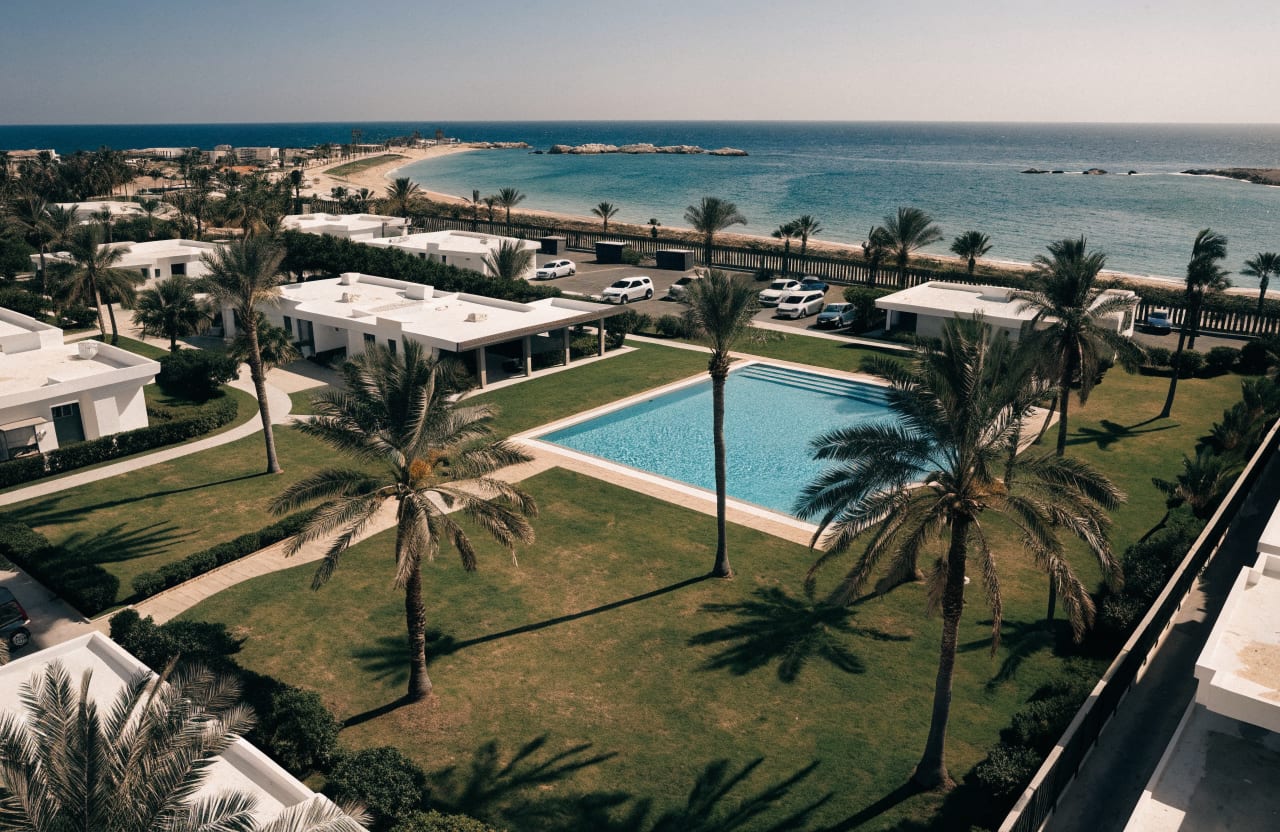
Furnished or unfurnished: what really stays in the flat and what it is worth
'Furnished' in Sharm means anything from a full kit to three pieces and the curtains. What usually stays, when furniture is a plus and when an overpayment, how to value it when negotiating and how to draw up the inventory so there is no dispute at handover.
What affects the price of a flat in Sharm: the multipliers that pull two similar flats apart
Square metres are not the main multiplier. Water and view, area and buyer, the building and its management, the service charge as price over time, readiness, floor and documents: the mechanics of price without figures, and how to read the real premium in the catalogue.
Flat handover in Sharm El Sheikh: what to check, how to record it and why not to hurry
After handover the defects are your concern and your money. What to bring, what must be checked — water, electricity, air-conditioning, windows, terrace, area, common areas — how to record defects, what to do afterwards and how to accept remotely.