Ready property versus off-plan: how the risks differ
One is a thing you can stand in. The other is a contract for something that does not exist yet. The difference runs through verification, payment, remedies and exit.

Ready property versus off-plan: two different purchases
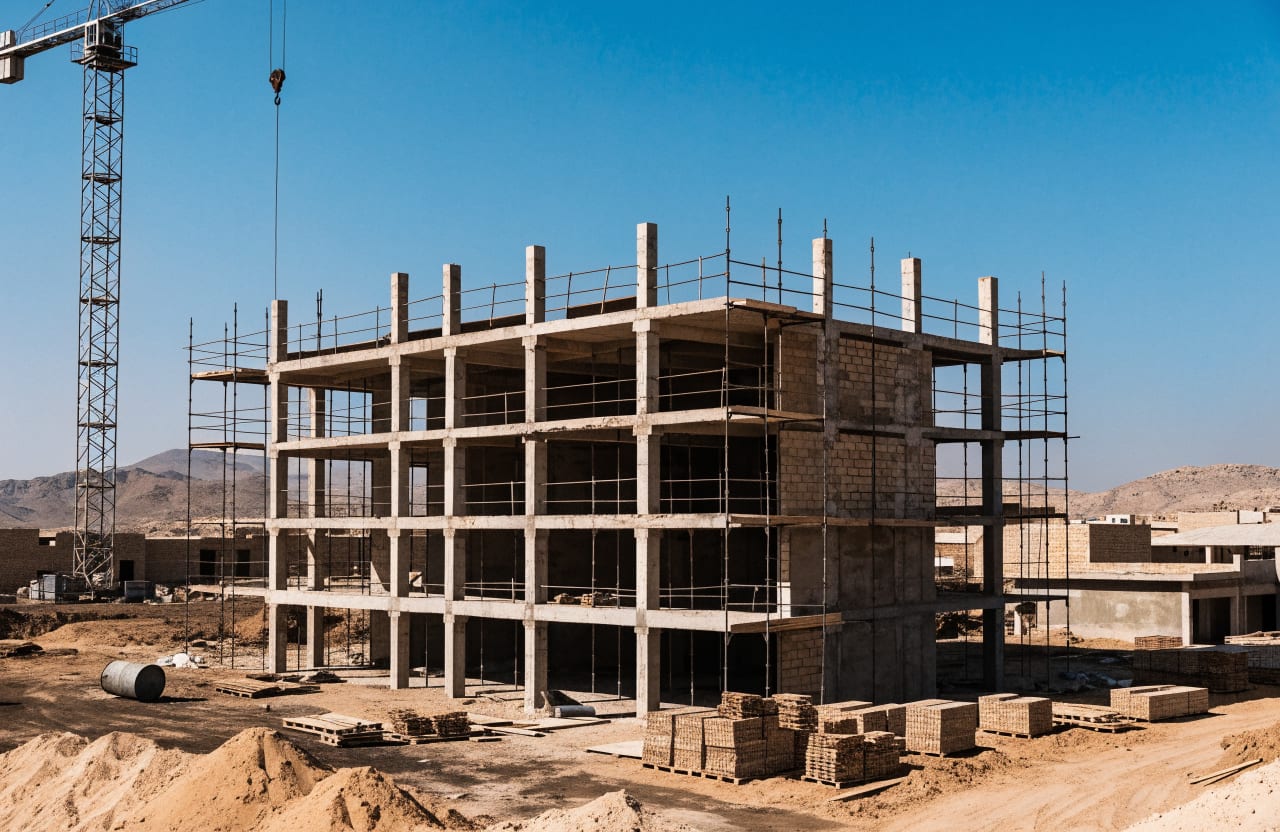
Ready property versus off-plan is usually discussed as a trade of price against patience. It is more useful to treat them as two different transactions. With a completed unit you are buying a thing that exists and can be inspected. With an off-plan unit you are buying a contractual claim on something that does not exist yet, and what you hold until handover is the contract and the obligations written into it.
Everything else follows from that distinction: what you can check, when your money is exposed, what happens if things slip, and how you get out if you need to.
What you can verify before paying
On a completed unit you can verify the important things directly. You can stand in the room, look out of the actual window rather than at a render, run the taps, see the state of the common areas, meet a neighbour, and observe how the compound is actually managed rather than how it is described.
On an off-plan unit you verify a different set of things: the contract, the specification, the developer's completed projects, the site itself, and the documentation behind the land and the permissions. It is not less verification. It is verification of a promise rather than of a room, and it leans harder on documents.
How payment exposure differs
A completed purchase has a short payment schedule, so the period during which you have paid money and do not yet hold your position is comparatively brief. An off-plan schedule spreads payments across the build, which means a longer period in which you are a creditor of the project rather than the holder of a finished asset.
That is the core risk difference, and it is structural rather than a matter of anyone's good faith. Each instalment should have a defined trigger in the contract — a date, a construction milestone, or handover — so that what you pay tracks what has actually happened.
Delay, and what the contract says about it
Delay is the most common off-plan problem and the one buyers most often assume is covered. Assume nothing: what happens if the developer is late depends on what the contract provides, and remedies for delay are a matter of the contract terms and Egyptian law rather than of general expectation.
Read for a stated completion obligation, a grace period if there is one, what follows if the grace period passes, and whether anything is payable to you or deductible by you. Ask your lawyer what those clauses are worth in practice, which is a different question from what they say.
Specification drift
A brochure is marketing. The finish schedule attached to the contract is the document that matters, and it should list materials, fittings, appliances, and what is included in the kitchen and bathrooms. Where the contract permits substitution, it should say substitution with what — equivalent quality is a phrase that means something only if someone has defined it.
The same applies to areas and to the compound. What is promised in shared facilities should appear in a document, with a stage at which it is delivered.
Handover, and the acceptance inspection
For an off-plan unit, handover is the moment the promise is tested. An acceptance inspection exists to compare what was built against what was contracted, to record defects in writing before you accept, and to establish meter readings. Do it properly, or have someone do it properly on your behalf, and do not sign an acceptance that says everything is satisfactory before you have looked.
The service charge generally begins from handover, so the date has a cost consequence as well as a practical one.
The compound around you while it is being built
An off-plan unit is often delivered into a compound that is not finished. That means construction noise, incomplete landscaping, facilities that are promised but not yet open, and a service charge that may be running on a developer subsidy while occupancy builds. None of that is a defect in the unit; all of it is part of the experience of the first years.
Exit before completion
If you need to sell a completed unit, you sell a unit. If you need to exit an off-plan purchase before handover, you are assigning a contract, and whether and how you can do that depends on the contract terms and on the developer's consent requirements. This is worth asking about before you sign rather than when you need it.
How Dommare represents the difference
The Property Passport records a state per check, and an off-plan unit simply has a different set of applicable checks — some are marked not applicable, others sit at received or under review because the documents that would close them do not exist yet. That is why the Passport is a set of states rather than a score: a score would flatten a real difference into a worse number.
Payment plan and total-cost outputs are computed by the calculators from the terms, not quoted in prose, and estimates are labelled as estimates. Investment outputs on the platform are not financial advice.
Which to look at first
If you want certainty and a short path to using the property, start with completed stock in the Sharm El Sheikh search. If you are willing to hold a contract and monitor a build, look at the developments listing and read the specification before the price. Either way, run the True Cost calculator on one candidate from each side and take both results to a Dommare advisor — comparing two computed totals is more informative than comparing two asking prices.

Furnished or unfurnished: what really stays in the flat and what it is worth
'Furnished' in Sharm means anything from a full kit to three pieces and the curtains. What usually stays, when furniture is a plus and when an overpayment, how to value it when negotiating and how to draw up the inventory so there is no dispute at handover.

What affects the price of a flat in Sharm: the multipliers that pull two similar flats apart
Square metres are not the main multiplier. Water and view, area and buyer, the building and its management, the service charge as price over time, readiness, floor and documents: the mechanics of price without figures, and how to read the real premium in the catalogue.
Flat handover in Sharm El Sheikh: what to check, how to record it and why not to hurry
After handover the defects are your concern and your money. What to bring, what must be checked — water, electricity, air-conditioning, windows, terrace, area, common areas — how to record defects, what to do afterwards and how to accept remotely.