First line by the sea: what it means in Sharm El Sheikh in practice — and what to check instead of the words
'First line' is advertising language without a definition: it covers a building at the water and one across the road from it. The three things that actually matter instead of the row number, why on a slope the second line often beats the first, what can change after the purchase and how to check it all in one viewing.
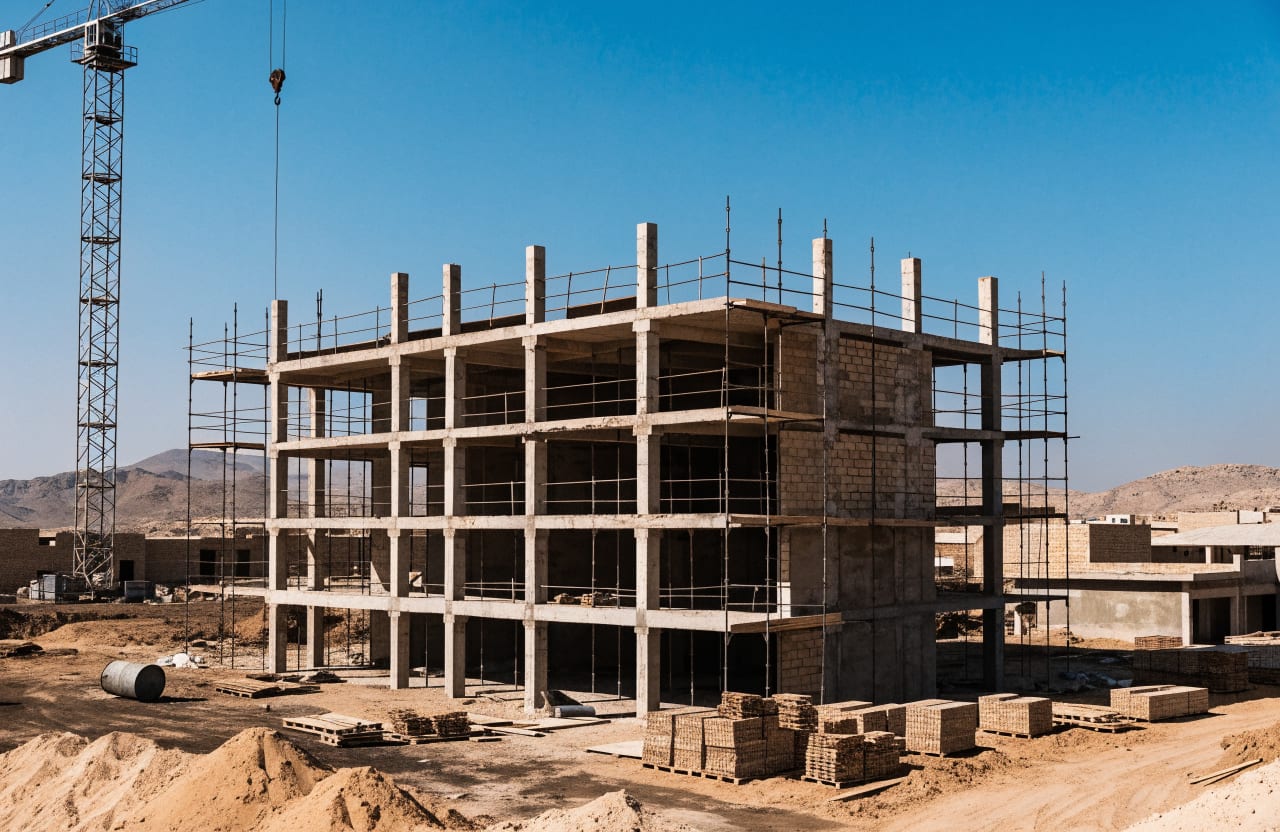
'First line' is one of the most frequent phrases in Sharm El Sheikh property listings and one of the emptiest. It has no definition in law or in agency practice: 'first line' is used for a building at the water with its own way down to the reef, a building across the road from the shore, a building with a sea view from a high plateau, and even a building from which the sea can be seen from the roof. The buyer hears 'first line', pays a premium for the word — and then finds a hotel between the building and the water and a fifteen-minute staircase to the beach. This article is about what stands behind the words and what to check instead.
Why the 'line' says nothing
Picture three buildings. The first stands right at the escarpment in Hadaba: the water is visible from every window, but the way down is a hundred steps cut into rock, and there is no beach at the building. The second stands across the road from the shore in Naama: a 'second line', yet the sandy entry into the bay is two minutes' walk. The third stands in Sharks Bay on the slope in the second row and sees the sea over the roofs of the first row, whose own view is blocked by its palms. Which is the 'first line'? By the listings, all three. In life, each is its own case.
Sharm adds its own twist to the general confusion: terrain. The town stands on plateaus and slopes, and distance on a map says almost nothing about the way to the water. So instead of the row number we suggest three concrete attributes.
The three attributes that actually matter
1. Whether the water is visible from this flat
Not from the building, not from the complex, not from the roof — from the windows and the terrace of the very flat you are buying. In one building a top-floor flat with a horizon view and a ground-floor flat facing a fence are sold under the same words 'first line' and differ twice in price. The view cannot be added by renovation, which is why it is priced separately from everything else.
2. How long it takes to reach the water — and by what
Not 'how many metres to the sea' but how many minutes on foot to a place where you can get into the water: a road, a staircase, a pontoon over the reef, a hotel's beach. In Hadaba a building at the escarpment can be further from a swim than a building in Naama a block from the shore. The difference between metres and minutes has its own article.
3. What lies between the building and the shore — and who owns it
A hotel whose beach you will use under an agreement that can end. An empty plot that will one day be built on. A road. A protected zone where building is forbidden — the best case for a view. The answer decides both beach access and the future of the view, and listings almost never give it.
Beach access: four cases behind one word
- Own beach or way down to the reef within the complex: the most reliable case; check whether its upkeep is in the service charge.
- A neighbouring hotel's beach under the complex's agreement: works while the agreement lasts; ask its term and what happens when the hotel changes hands.
- A public beach or way down nearby: free and permanent, but no loungers or security; judge its condition and the route.
- No access — a view only: an honest case when stated as such. The problem is when it is sold as 'first line with beach'.
On a slope the second line often beats the first
In Sharks Bay, Montazah and at the edge of Hadaba the buildings stand in terraces. The second row is higher than the first and looks at the sea over its roofs, while the first row often looks into its own trees or the neighbouring hotel. And the second row is cheaper, because it is 'second line'. For a buyer who wants the view rather than ten metres to the water, this is the best deal in town — but it can only be seen on foot, at a viewing, not in a listing.
What can change after the purchase
The view is the only feature of a flat that somebody else can alter. An empty plot in front will be built on some day; a hotel will rebuild a block; the neighbouring complex will add floors. What lies between the building and the water, who owns the plot and what may be built on it are questions for before the deal. In Nabq, where construction is active, this matters most; in protected zones by the shore, by contrast, building is forbidden, and such a view is protected better than any 'first row'.
How to read a listing
- 'First line' → ask: the view from this flat? the way to the water? what is between the building and the shore?
- 'Sea view' → partial or direct; from the terrace or from the bedroom; could construction block it.
- 'Private beach' → whose, under what document, for how long.
- 'A hundred metres to the sea' → a hundred metres to what: water you can enter, or the cliff above it.
How to check in one viewing
- Look at the view from every window and the terrace of this flat; photograph it.
- Walk the route to the water, time it, note staircases and other people's land.
- Ask in writing whose beach it is and on what basis residents use it.
- Find out what the plot in front is and what may appear on it.
- Compare the listing's wording with what you saw. A gap is grounds for negotiation or for walking away.
- Come a second time at a different hour: shade, sun and wind on the terrace change.
Questions fréquentes
What does 'first line' mean in Sharm El Sheikh?
There is no single definition: it covers a building at the water, one across the road and one with a view from the plateau. Look at three things: the view from this flat, the way to the water and what lies between the building and the shore.
Is the first line always more expensive?
Usually, but not always justifiably. On slopes the second row often has the better view and costs less. The price should reflect the view and water access, not the word.
How do I check whether a building has its own beach?
Ask in writing who owns the beach, under what document residents use it and for how long. A neighbouring hotel's beach under an agreement is not the same as your own.
Can a sea view disappear after the purchase?
Yes, if the plot in front is built on. Find out what is there, who owns it and what may be built. A view over a protected zone is the best protected.
What matters more — the view or closeness to the water?
It depends on the scenario: for holidays and tourist lets, water access; for living and wintering, the view and quiet. Decide before the viewings.
Where in the catalogue can I see how a building stands relative to the sea?
Every property in the Dommare catalogue has a pin on the map and, where known, the distance to the sea with its source. The pin is more honest than any description.
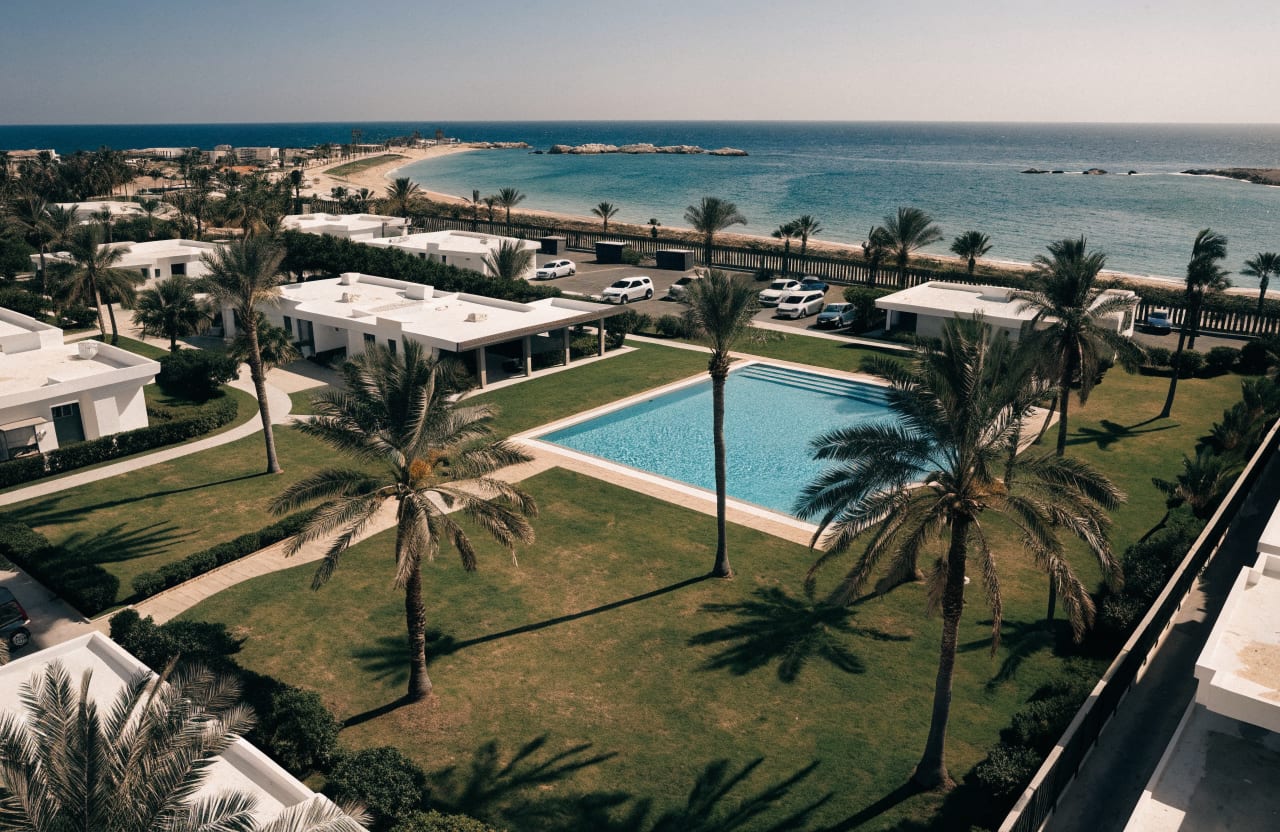
Furnished or unfurnished: what really stays in the flat and what it is worth
'Furnished' in Sharm means anything from a full kit to three pieces and the curtains. What usually stays, when furniture is a plus and when an overpayment, how to value it when negotiating and how to draw up the inventory so there is no dispute at handover.

What affects the price of a flat in Sharm: the multipliers that pull two similar flats apart
Square metres are not the main multiplier. Water and view, area and buyer, the building and its management, the service charge as price over time, readiness, floor and documents: the mechanics of price without figures, and how to read the real premium in the catalogue.
Flat handover in Sharm El Sheikh: what to check, how to record it and why not to hurry
After handover the defects are your concern and your money. What to bring, what must be checked — water, electricity, air-conditioning, windows, terrace, area, common areas — how to record defects, what to do afterwards and how to accept remotely.