Hadaba, Sharm El Sheikh: the complete area guide for home buyers
The residential plateau above the sea where Sharm lives all year. How the area is laid out, how its edges differ, how you get down to the water, who it suits and what to check at a viewing.
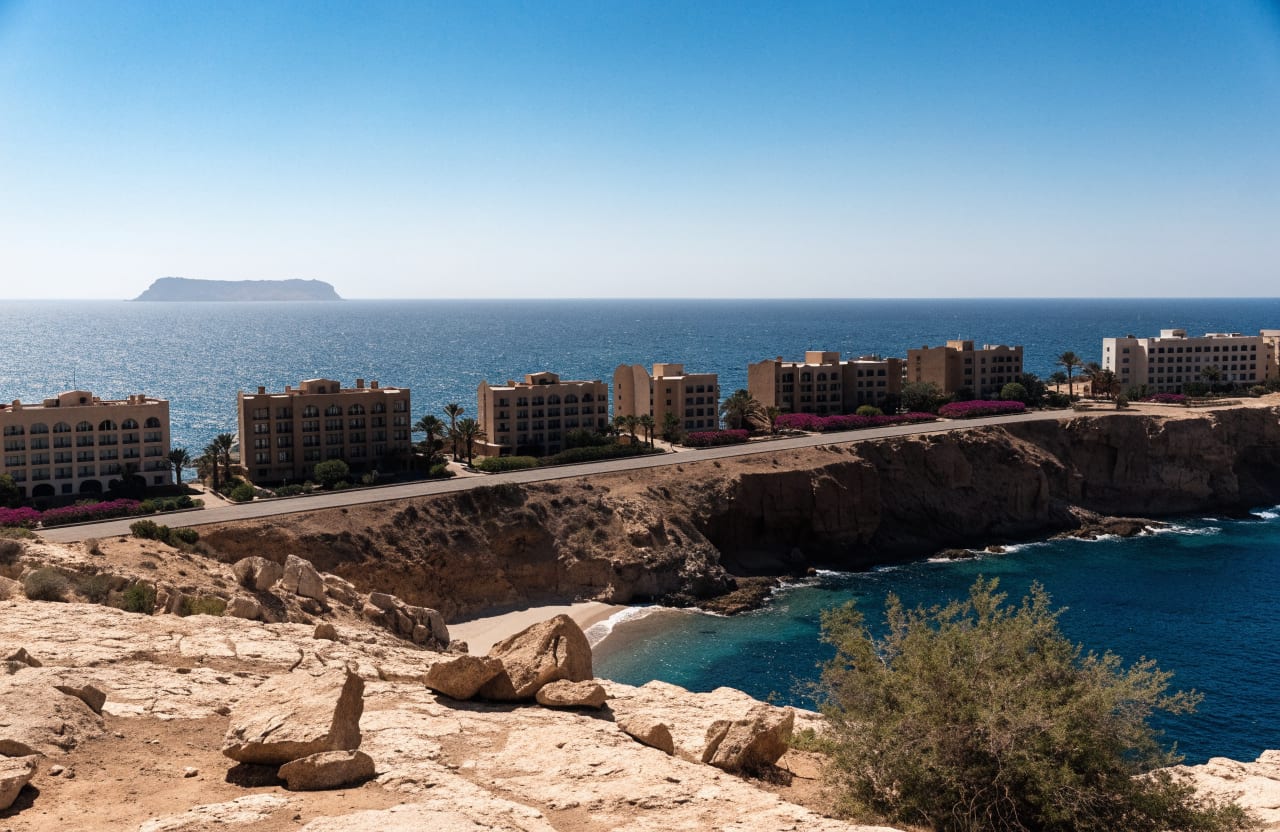
Hadaba is the Umm El Sid plateau, raised above the shore between Naama Bay and Ras Um Sid. If Naama is the resort, Hadaba is the town: schools, a clinic, markets, workshops, homes lived in all year rather than only in season. It is the most residential of Sharm's six areas, and it is where people look first when they buy to live or to spend long winters rather than to holiday.
How the area is laid out
The plateau runs along the shore and inland. On the sea side it ends in a rock escarpment with the reef below; on the other side it slopes down to El Salam Road, where Naama Bay begins. Inside is a flat grid of low-rise blocks: compounds of different years, standalone buildings, villas, and between them the shops and cafés used by residents rather than tourists.
The buildings span generations. Complexes from the early two-thousands with mature gardens and settled management stand next to houses of recent years with new services but no greenery yet. That gives a buyer a choice the new areas do not: established or new, each with its own merits.
Hadaba is not one place: the edges of the plateau differ
The main mistake in reading listings is to treat 'Hadaba' as uniform. The distance to the sea on the plateau is not one number: a building at the escarpment looks at the water and reaches the reef in a few minutes, while a building deep in the grid may be twenty minutes' walk from the nearest way down. Price, view and way of life differ between those two, though the listing calls both 'Hadaba'.
- The edge above the sea: views, wind, ways down to the reef, the area's dearest homes. People live here for the water and the horizon.
- The middle of the plateau: quiet residential blocks, schools and shops close by, the water further on foot. People live here for daily life and price.
- The El Salam side: closer to Naama and its facilities, livelier, the road under the windows. People live here for convenience.
- Towards Ras Um Sid: by the lighthouse and the cliff, with a view of the strait; few listings.
So look at the exact address and the dot on the map, not the area's name. In the catalogue every property in Hadaba carries a pin — it shows at once which edge of the plateau it stands on.
Getting down to the water
Hadaba stands high and the sea is below. The ways down differ: a road for cars in one place, a staircase cut into the rock in another, a path through a hotel's grounds in a third, where the hotel decides whether to let outsiders through. Walking distance on a map and walking distance in July heat are different things. The rule is simple: walk the route to the water on the day of the viewing, see what it passes through and whether it is open all year, and only then believe the word 'near'.
Below the escarpment is the reef, entered from the shore by pontoons and ladders. That is one reason divers and daily swimmers love Hadaba: the water is clear and the depth comes quickly. Families with small children find the enclosed bays of Naama or the hotel beaches easier — worth weighing when choosing.
Daily life: schools, shops, transport
Unlike the resort areas, Hadaba's daily life is built for residents: grocery shops and markets, pharmacies, a clinic, schools, car workshops, repair shops. Shop prices are lower than on Naama's promenade. Naama and its evening life are a few minutes away by car or taxi; walking down from the plateau takes a while, and walking back up in the heat is hard.
A car is useful in Hadaba but not essential: inside the area everything is walkable, and taxis in Sharm are plentiful and inexpensive by European standards. If there will be no car, check when choosing a home that the shop and the pharmacy really are next door, not 'in the area'.
Who Hadaba suits
Hadaba is chosen for permanent living and long winters: quieter than Naama, a more familiar rhythm of daily life, usually cheaper than the first line, and the neighbours are year-round residents rather than tourists changing every week. For a family with children it is, as a rule, the most convenient area of Sharm: schools nearby, quiet courtyards, slow traffic.
For nightly lets to tourists the area is harder: the guest needs a car or a taxi to the beach and the promenade, and that shows in demand and in the nightly rate. If the purchase is meant to earn, decide honestly which tenant it is for. Long lets — to expats working in Sharm, teachers, families — are traditionally in demand in Hadaba precisely because the area is residential.
What is for sale and what it costs
Hadaba offers studios and flats in compounds, flats in ordinary buildings, townhouses and villas — a wider range of formats than any other area of Sharm. We name no prices in this article: they change, and a from-to table has no source. Current Hadaba listings with price, currency and confirmation date are in the catalogue linked below; it also shows which edge of the plateau is dearer and why.
What to check at a viewing in Hadaba
- The real route to the water — walk it rather than measure it on the map; find out whose land it crosses.
- The view: on the plateau it is often the flat's main value. Check whether a neighbouring building site could block it.
- The wind: stronger at the escarpment — a plus (cool) and a minus (the balcony).
- Water and electricity in the building at peak season: tanks, pumps, generator, pressure.
- Shops and transport within walking distance if there will be no car.
- For a compound — the service charge, what it covers, whether the complex has arrears, the letting rules.
- For an ordinary building — the stairwell, the roof, the shared tanks; who the neighbours are and whether they live there all year.
- Schools and clinics nearby if the purchase is for a family.
Häufige Fragen
Is Hadaba by the sea?
It is a plateau above the sea. The edge reaches the reef in a few minutes; the inner blocks are twenty minutes' walk from the water. Judge by the dot on the map, not the area's name.
Who is Hadaba for?
Buyers who want to live there, winter there or raise children there: quiet, with schools and shops close by. Nightly lets to tourists are harder — guests need transport to the beach.
Do I need a car in Hadaba?
Useful but not essential: inside the area everything is walkable and taxis are plentiful. Naama and its promenade are a few minutes away by car.
Are there beaches in Hadaba?
Below the escarpment is a reef entered by pontoons and ladders — loved by divers and daily swimmers. There are no enclosed sandy bays for small children; those are in Naama and at the hotels.
How does Hadaba differ from Naama Bay?
Hadaba is the residential plateau: quiet, year-round neighbours, cheaper. Naama Bay is the resort centre below: everything on foot, noisy, tourist demand for lets.
What do flats in Hadaba cost?
The spread depends on the edge of the plateau, the view, the building and the condition. Current prices are in the Dommare catalogue for Hadaba; each property shows its currency and the date the price was confirmed.
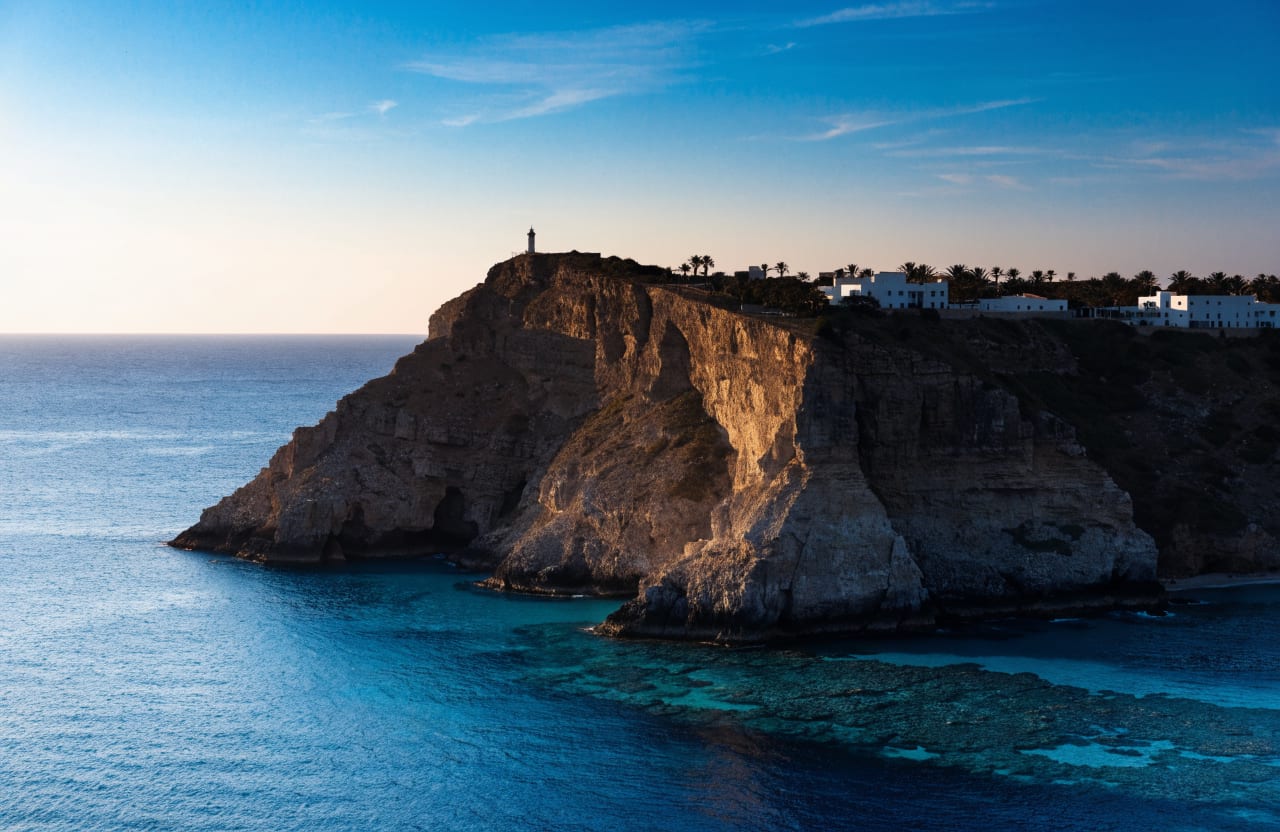
Ras Um Sid: the area guide — lighthouse, cliff and the reef beneath the windows
Sharm's oldest residential corner and the only one where a home's value rests on the reef below. How the area is laid out, how it differs from Hadaba, who it suits, what is for sale and why the main question at a viewing is the stairs to the water, not the metres to it.
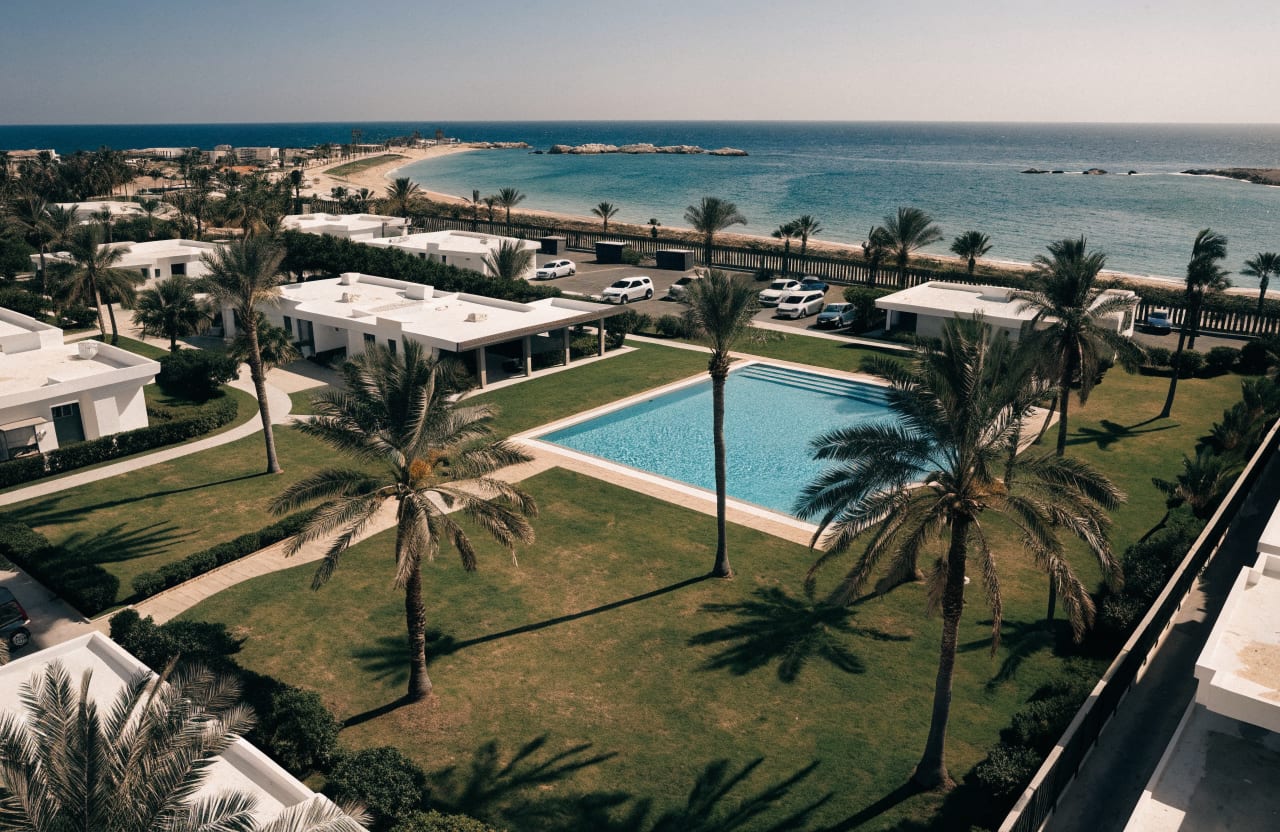
Beachfront compounds in Sharm El Sheikh: what 'own beach' really means
Five relationships between a compound and a beach — from a gate in the grounds to a bus to another area. Which Sharm compounds have a confirmed private beach in the directory, where the beach is only a hotel's under agreement, what you buy in each case and what to check.
New developments in Sharm El Sheikh 2026: what is being built, by whom, and what is known about dates
Large shoreline schemes, new phases in established resorts and recent buildings in Montazah and Nabq — from the directory, with a source for every date. Who builds in Sharm and how to buy in a project under construction without a lottery.