Renting out a property in Sharm: how it works in practice
Four ways owners let units in Sharm, who does what in each, and the operational reality behind the arrangement — including the parts that stay with you whatever you sign.

Renting out a property in Sharm: four models, not one
Renting out a property in Sharm is a choice between four arrangements rather than a single activity, and they differ mainly in how much of the work leaves your hands. Before comparing returns, compare who does what — because the model you can actually sustain from another country is the one that will work.
- Self-managing remotely, with local help you arrange yourself.
- A local management company handling the letting end to end.
- A compound or developer rental programme, where the unit joins a pool.
- Long-term letting to a resident tenant rather than to visitors.
Self-managing from abroad
Self-managing means you keep the marketing, the guest communication, the pricing and the calendar, and you assemble the local layer yourself: someone for keys and check-in, someone for cleaning and laundry, someone for maintenance call-outs. It gives you the most control over presentation and the most exposure to small failures.
The part people underestimate is response time. A guest with a problem needs an answer in minutes, not when you wake up in another time zone, and the person who answers has to be able to act rather than relay.
A local management company
A management company takes over most of the operational load: listing the unit, handling enquiries and check-ins, cleaning between stays, dealing with maintenance, collecting payment, and reporting to you. What remains yours is the asset itself — the condition of the unit, the furnishing standard, the service charge, and the decisions about how it is positioned.
This is where a written management agreement matters. It should set out the scope of services, who authorises spending and up to what point, the reporting cadence and format, how and when money reaches you, what happens to the unit in low periods, and how either side ends the arrangement. An agreement that is silent on authorisation limits will produce an argument sooner or later.
A compound or developer programme
Some compounds and developers run their own rental programme, where your unit joins a pool and is let alongside others. The appeal is that it is close to hands-off. The trade-off is control: you may have less say over who stays, how the unit is presented, when you can use it yourself, and how the pool allocates bookings.
Read that arrangement as carefully as a purchase contract, particularly the clauses on owner use, the minimum commitment period, and what happens if you want to leave the programme.
Long-term letting
Letting to a resident is a different business. Turnover is low, the operational load is much smaller, wear is slower, and the unit is furnished to a different standard. It also means the property is occupied when you might want to use it, which for many owners is the real reason they choose short lets despite the extra work.
What stays with you in every model
The compound service charge continues whether or not the unit is let, and whether or not anyone is in it. Utilities and internet generally remain in the owner's name, so the accounts and their arrears are yours. Furnishing wear under a short-let regime is faster than most owners expect, and a furnishing pack has to include the unglamorous items — bedding sets, kitchen basics, an iron, a hairdryer, spare keys — because a missing one becomes a complaint.
And someone has to be reachable when you are not. Decide who that is before the first booking rather than during the first problem.
The compliance side
This part deserves a lawyer rather than a forum. Letting activity may be subject to registration requirements, to permission from the compound or the developer, and to local tax obligations, and the applicable requirements are confirmed for the specific unit and the specific arrangement rather than assumed from what a neighbour does.
Ask three questions before you start: does the compound permit short letting at all, what registration applies to the activity, and what reporting or tax obligation follows from the income. Getting a yes to the first does not answer the other two.
Why there are no yield figures here
Dommare does not publish a yield without a documented sample behind it, and at launch we do not have one for Sharm. Where an estimate is shown anywhere on the platform it is labelled as an estimate, with its source, and it is not presented as a fact. Investment outputs on the platform are not financial advice.
That means this article cannot tell you what a unit earns, and any article that does is telling you about someone's assumption. What we can do is model a specific unit with you and show which inputs are sourced and which are not.
What to do next
Pick a unit or a compound you are considering and ask a Dommare advisor two things: whether short letting is permitted there, and what the service charge is on a sourced basis. Then run the True Cost calculator so the recurring costs sit next to the purchase costs in one view before you plan any letting at all.
Wintering in Sharm El Sheikh: rent or buy
Three to five warm months from November to April — the town's steadiest scenario. How wintering works in practice, when renting is wiser than buying, how to count honestly over the same horizon, and which flat suits living here half the year.
Moving to Egypt with a family: a step-by-step plan — scouting, status, school, money, home
A move is not a holiday that ran long. Seven steps: scouting in the season that worries you, status and documents with a lawyer ahead, the school as the choice of area, three years of income, renting before buying, what to bring and what to buy locally, medicine. And the six mistakes made most often.
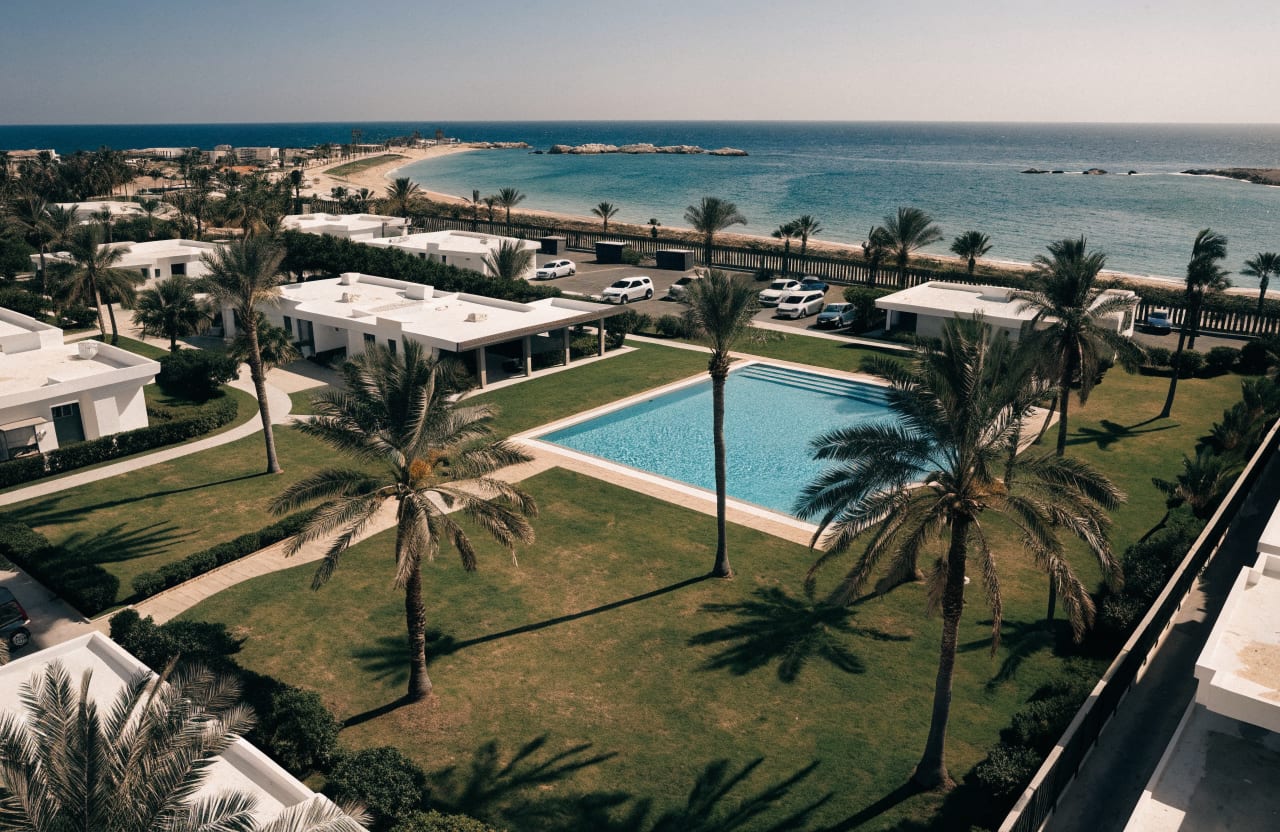
The cost of owning a flat in Sharm El Sheikh for a year: service charge, utilities, repairs, management
The price of the flat is the price of entry; then comes the price of ownership. The full list of cost lines — fixed, seasonal, sudden and legal — without invented sums, and a way to get a real figure for each line before the deposit.