Moving to Egypt with a family: a step-by-step plan — scouting, status, school, money, home
A move is not a holiday that ran long. Seven steps: scouting in the season that worries you, status and documents with a lawyer ahead, the school as the choice of area, three years of income, renting before buying, what to bring and what to buy locally, medicine. And the six mistakes made most often.
Moving to Egypt with a family is not a holiday that ran long, and it cannot be decided like one. School, nursery, doctor, work or income from a distance, documents for a long stay, what to bring and what to leave, and a flat the family will live in rather than visit. This article is a practical plan for moving to Sharm El Sheikh for good: what to decide at home, what to check on a scouting trip, in what order to act and which mistakes families make most often. Legal and immigration questions are named here but not settled: a lawyer settles them on your documents, and we come back to that several times.
Step 1. Scouting: one trip instead of a hundred chats
Before any decision — two or three weeks in Sharm, not in a hotel but in a rented flat in the area you are considering, on weekdays and in the season that worries you: summer if you fear the heat, winter if the wind. In those weeks: school or nursery in the morning, clinic and pharmacy in the afternoon, shops and the way home in the evening, the compound courtyard at dusk. A conversation with two or three families who have lived here for more than three years — they will tell you what no article does, this one included. Forums and chats are useful for contacts and useless as a source of rules.
Step 2. Status and documents — with a lawyer, in advance
Entry permission and the right to remain in the country are administered separately from the ownership of a home. Egypt has over time operated arrangements under which property ownership can support an application for a longer stay, but the conditions are set by the authorities, administered locally and have changed over time. An application is a file of documents, and documents from abroad usually need translation and legalisation, which takes time. What exactly to gather for your family — passports, birth and marriage certificates, references, documents for the home — a lawyer tells you for your case, and it starts months ahead, not a week. More in our article on residency and long stays.
Step 3. School and nursery decide the area
Sharm has fewer options than Hurghada, but it has them: international schools with an English curriculum, private Egyptian schools, nurseries, online schooling on the Russian curriculum with an in-person community. Most families living here all year choose Hadaba — the residential plateau with schools, a clinic and permanent neighbours. The order: school — area — flat. Visit the school, learn the language, fees, waiting list, bus; for a teenager, ask separately about certificates and onward admission, because that decides which curriculum is needed. Family areas are in our article on living in Sharm with children.
Step 4. Income and money
Most relocating families live on remote income or savings: the local job market for a foreigner is narrow and mostly tied to tourism. Before the move — an honest answer to what the family lives on for three years if income dips. Money from abroad arrives through a chain of banks with fees and delays — the route is planned before the move with your bank and adviser, and it changes. Currency and tax obligations at home while living abroad are for your adviser there, before departure.
Step 5. The flat: rent first, then buy
The first year — renting in the chosen area, even if buying is already decided: a year shows whether it is the right area, school and building. Buy in the spring of the second year, when the town is familiar, and by our articles on the real cost of buying and the owner's year. A family needs two or three bedrooms, the right floor and a lift, air-conditioning in every bedroom, water and a tank, a closed courtyard without traffic, living neighbours. What to check in a family flat is a separate list in the article on living with children.
Step 6. What to bring, what to leave, what to buy locally
- Bring: original documents with translations and legalisation, prescription medicines with a reserve and the prescriptions, the children's things they are attached to, appliances that run on 220 V, winter clothes for trips home and jumpers for the evenings.
- Leave: furniture and large appliances — shipping costs more than buying locally; books — be selective; a car — a separate conversation with a lawyer, more often bought locally.
- Buy locally: furniture, mattresses, air-conditioners, kitchenware, children's furniture — the choice exists, prices vary, imports are dearer and scarcer out of season.
- Pets: import is possible with veterinary documents under Egypt's and the airline's rules; check well ahead — vaccination timings run in months.
Step 7. Medicine and insurance
Sharm has a state hospital, private clinics and hospitals, dentists and pharmacies at every corner — enough for colds, tests and injuries. Complex surgery and serious chronic conditions mean Cairo or Europe, and permanent residents plan for it through insurance with evacuation. For a family: a paediatrician ten minutes away is an area criterion; chronic prescriptions — check for equivalents before moving; children's vaccinations — compare the schedules.
What takes longest to get used to
The heat from June to September, around which the whole day is rebuilt. The unhurried pace: 'tomorrow' means 'soon'. Dust and salt that age appliances, furniture and facades. The limited choice of imports out of season. The distance from serious medicine. And a social circle to build anew: Sharm's Russian-speaking community is smaller than Hurghada's but active — chats, meetings, help with doctors, schools and tradesmen. The families who stay for years are usually those who came for the way of life rather than away from something.
The mistakes made most often
- Buying a flat before the scouting trip and before the school — then driving the child across town.
- Moving in summer without a summer scouting trip — and leaving in September.
- Settling status 'on the spot' without a lawyer and documents — and losing months to legalisation.
- Shipping furniture and appliances in a container — dearer than buying here.
- Living on one source of income without a year's reserve.
- Planning by forums — the rules there are more often stale than right.
الأسئلة الشائعة
Where do I start a family move to Egypt?
With a scouting trip: two or three weeks in a rented flat in the chosen area, on weekdays and in the season that worries you — school in the morning, clinic in the afternoon, courtyard in the evening. In parallel, a lawyer on status and documents, months ahead.
Does buying a flat give the right to live in Egypt?
Not by itself: entry and stay are administered separately. Arrangements have existed at various times where ownership supports an application for a longer stay; the authorities set the conditions. A lawyer decides on your documents.
Are there schools in Sharm for foreign children?
International schools with an English curriculum, private Egyptian schools, nurseries, online schooling on the Russian curriculum with an in-person community. Fewer than in Hurghada; most families live in Hadaba near the schools.
Should I rent or buy when relocating?
Rent in the chosen area for the first year, even if buying is decided. Buy in the spring of the second year, when the town is familiar.
What should I bring when moving to Egypt?
Documents with translations and legalisation, medicines with prescriptions, the children's personal things, 220 V appliances, jumpers for the evenings. Furniture and large appliances — buy locally.
What is the most common mistake when moving to Sharm?
Buying a flat before the scouting trip and the choice of school — then driving the child across town. The second: moving in summer without a summer scouting trip.
Wintering in Sharm El Sheikh: rent or buy
Three to five warm months from November to April — the town's steadiest scenario. How wintering works in practice, when renting is wiser than buying, how to count honestly over the same horizon, and which flat suits living here half the year.
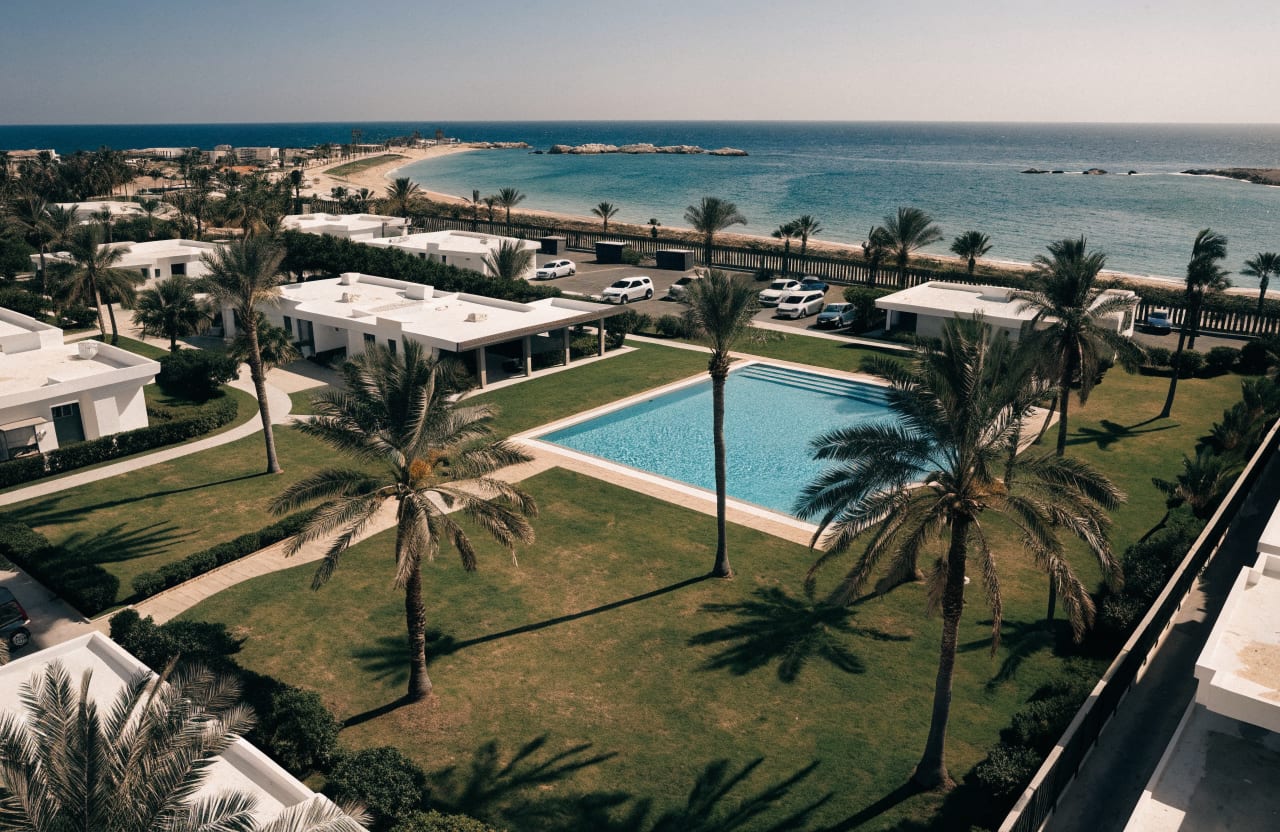
The cost of owning a flat in Sharm El Sheikh for a year: service charge, utilities, repairs, management
The price of the flat is the price of entry; then comes the price of ownership. The full list of cost lines — fixed, seasonal, sudden and legal — without invented sums, and a way to get a real figure for each line before the deposit.
Property management in Sharm El Sheikh: what it really covers
The word 'management' sells anything from a monthly visit to the full cycle of short-term letting. Three formats, who offers them in Sharm, how they are paid for, eight points to put in writing, and how to choose a manager.