Compound service charges and what they cover
The recurring cost of owning inside a compound, what it funds, how it is assessed, when it starts, and the questions to ask before you buy rather than after your first invoice.
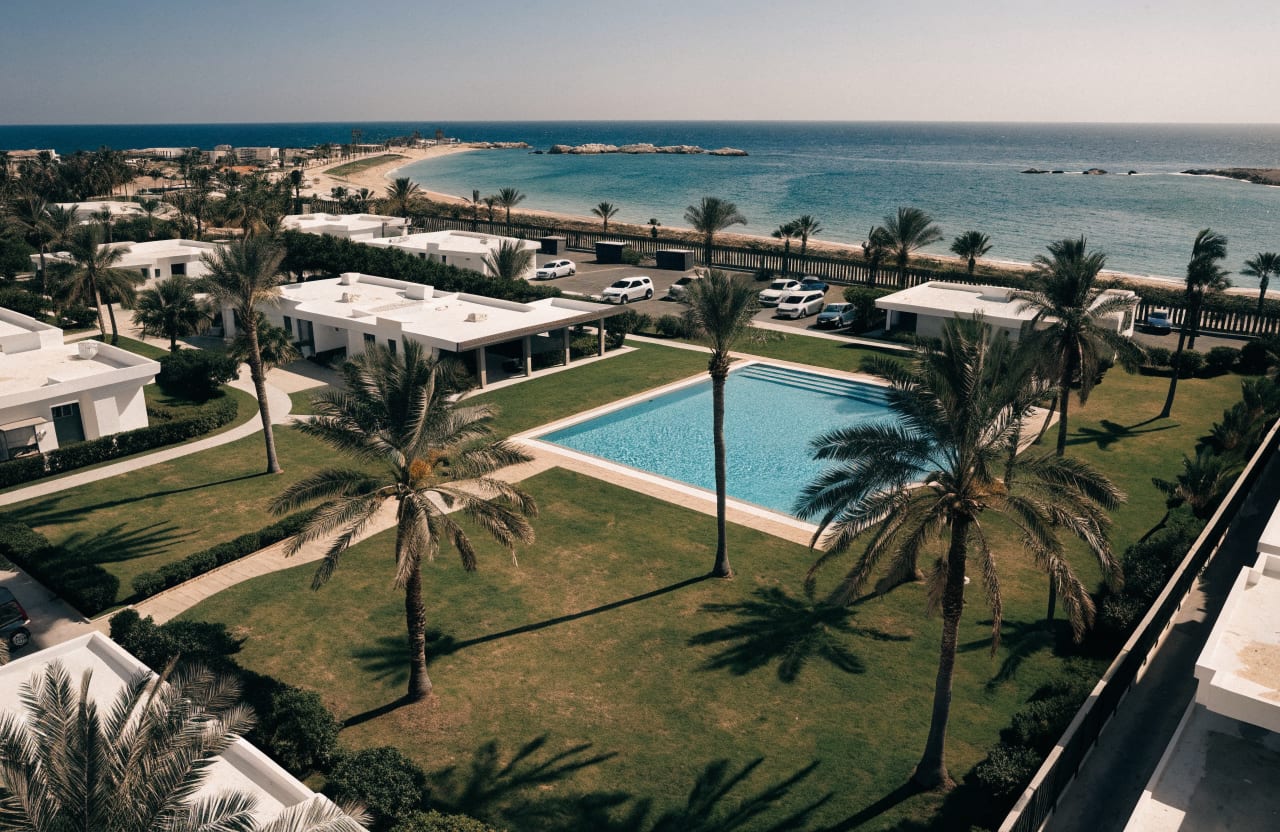
What a compound service charge actually is
A compound service charge is the recurring contribution owners make towards running the shared parts of the development. It is the cost that continues after the purchase is finished, it arrives whether or not you are in the country, and it is the line buyers most often leave out of their arithmetic.
Unlike the purchase price, it is not a one-off you can plan around once. It is a standing obligation attached to owning inside a managed development, and it changes over time.
What the charge typically funds
- Security: gate staff, patrols, cameras and access control.
- Landscaping and irrigation, which in this climate is a continuous cost rather than a seasonal one.
- Pool maintenance and water treatment.
- Common-area lighting and the electricity behind it.
- Lifts, where the buildings have them, including inspection and servicing.
- Waste collection and cleaning of shared areas.
- Upkeep of beach or reef access, where the compound has it.
- The management fee itself — the cost of somebody administering all of the above.
- A reserve or sinking fund, where the compound maintains one.
Two things are worth noticing about that list. Most of it is labour and utilities, which is why it moves over time. And the management fee is a separate line from the services, so ask which of the two you are looking at when you are quoted a figure.
How it is assessed
Compounds use different models. Some assess by unit area, so a larger unit pays more. Some assess by unit type, grouping apartments, duplexes and villas. Some charge a flat amount per unit regardless of size. Each model produces winners and losers depending on what you own, and none of them is standard across Sharm.
Ask which model applies before you compare two compounds, because a charge assessed by area and a charge assessed per unit are not comparable figures even when they sound similar.
When it starts
The charge generally begins to run from handover rather than from the date you signed. For a completed unit those are close together. For an off-plan purchase they can be far apart, which is one of the practical differences between the two: you are not paying a service charge on a building site, but you will start paying on a unit in a compound that may still be filling up.
That timing has a second consequence. A compound in its early years may be running on a developer subsidy, with the developer carrying the shortfall between what the units pay and what the services cost. When occupancy rises and the subsidy ends, the charge can change. Ask directly whether the current figure is the full cost of running the compound or a stage in getting there.
The reserve fund question
A reserve or sinking fund exists so that large periodic costs — resurfacing, replacing pool plant, lift overhauls, painting the buildings — come out of money already collected rather than out of a sudden levy on owners. It is unglamorous and it is one of the more informative things you can ask about.
A compound with no reserve is not necessarily badly run. It does mean that when a large cost arrives, it arrives as a bill. Ask whether a reserve exists, roughly what it is for, and who decides how it is spent.
Arrears, and what happens when they build up
Unpaid service charges are a common source of trouble, in two directions. If enough owners fall behind, the services degrade for everyone. And unpaid charges attached to a unit you are buying may follow the unit rather than the previous owner — whether they do in your case is a question for your lawyer, and it is one to ask before you pay a deposit.
What to ask before you buy
Ask for the current schedule in writing, with the assessment model stated. Ask what is included and, more usefully, what is excluded — parking, beach access, gym, water, satellite, anything that is billed separately. Ask for the history of changes over the last few years and the reason for each. Ask who sets the charge and who has to agree to an increase.
If you are comparing a European service charge or condominium fee to this, the analogy holds for what the money buys and breaks down on governance: the decision-making body, the rules on increases and the enforcement route are not the same, so do not assume the protections you are used to.
How Dommare shows it
A compound's service charge appears on the platform as a value with its source attached — developer-provided, partner-provided, or verified — and where it cannot be sourced it shows as not available rather than as an estimate someone assumed. For a specific unit, the figure belongs in the True Cost calculator alongside the rest of the cost lines.
What to do next
Pick a compound you are considering, open its page and check whether the service charge is sourced or shown as unavailable. Then run the True Cost calculator on a unit inside it, and ask a Dommare advisor for the written schedule and the account statement for that unit.

Ras Um Sid: the area guide — lighthouse, cliff and the reef beneath the windows
Sharm's oldest residential corner and the only one where a home's value rests on the reef below. How the area is laid out, how it differs from Hadaba, who it suits, what is for sale and why the main question at a viewing is the stairs to the water, not the metres to it.
Beachfront compounds in Sharm El Sheikh: what 'own beach' really means
Five relationships between a compound and a beach — from a gate in the grounds to a bus to another area. Which Sharm compounds have a confirmed private beach in the directory, where the beach is only a hotel's under agreement, what you buy in each case and what to check.

New developments in Sharm El Sheikh 2026: what is being built, by whom, and what is known about dates
Large shoreline schemes, new phases in established resorts and recent buildings in Montazah and Nabq — from the directory, with a source for every date. Who builds in Sharm and how to buy in a project under construction without a lottery.